
Understanding Overround in Betting
Betting is an exciting world. From cricket to kabaddi, Indian bettors are always on the lookout for the next big win. But if you’ve ever placed a bet and wondered why the odds never seem to fully align with reality, you might have stumbled upon the concept of overround. Today, we’re going to unpack this crucial concept in Indian betting and explain why it matters to your wallet.
What Is Overround in Betting?
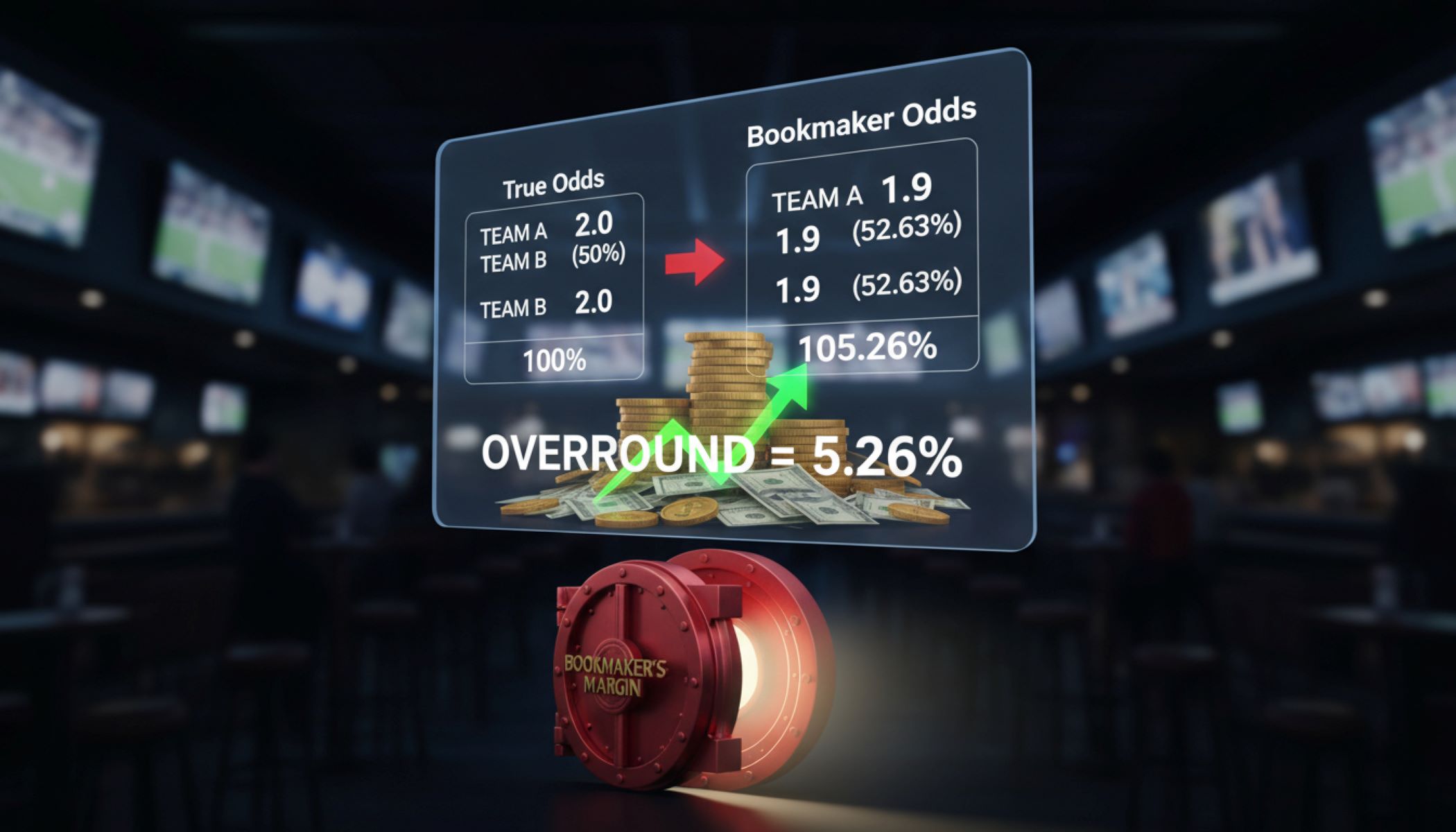
Overround, often referred to as the bookmaker’s margin, is essentially the built-in profit margin that betting companies embed into their odds to ensure they earn money regardless of the event’s outcome. Unlike a fair betting system, where the odds perfectly reflect the true probabilities of each outcome, overround slightly inflates the odds in the bookmaker’s favor. This subtle adjustment might seem insignificant at first glance, but it accumulates over time, allowing bookmakers to maintain a steady profit even when large amounts of money are wagered across multiple outcomes. For bettors, understanding overround is crucial because it directly impacts the value of the bets they place and the potential return on investment.
To put it in perspective, imagine a local market where a fruit seller consistently marks up the price of apples above their actual value. Whether the apples are perfectly ripe or slightly bruised, the seller guarantees a profit from each sale. Bookmakers operate in much the same way. The odds they offer never quite match the true probabilities of an outcome occurring. For instance, even in a seemingly even event, such as a coin toss with a 50/50 chance, the bookmaker will adjust the odds slightly lower than the true value for both sides. That difference, while subtle, is what constitutes the overround.
Overround is more than just a theoretical concept; it has practical implications for how betting markets function. By embedding this margin, bookmakers are protected against unexpected fluctuations in betting patterns, such as one side receiving an unusually high volume of wagers. This ensures that regardless of which outcome occurs, the bookmaker remains profitable. Additionally, the overround encourages a balance of bets across all possible outcomes, as uneven betting could expose the bookmaker to risk. In essence, overround acts as a safety net, maintaining the financial stability of betting operations while still offering enticing odds to bettors.
For Indian bettors in particular, understanding overround is vital for making informed decisions. Many beginners assume that odds represent the exact likelihood of an event, but in reality, a portion of the payout is already claimed by the bookmaker. Over time, this hidden margin can reduce the profitability of repeated bets, especially for casual or frequent players who don’t account for it. By learning to calculate and recognize overround, bettors can identify better value bets, compare odds across different platforms, and develop strategies that maximize their chances of winning while minimizing losses to the bookmaker’s inherent advantage. Overround, therefore, is a subtle but powerful factor that shapes the entire betting landscape.
Why Overround Matters for Indian Bettors
- It Directly Affects Your Potential Winnings: Overround is the hidden margin in the odds set by bookmakers. Even if you win a bet, a portion of what you could have earned is already absorbed by the bookmaker’s cushion. For instance, in a cricket match where both teams have an equal chance of winning, the true probability might be 50% each. However, if the bookmaker sets the odds at 1.91 for both sides, the implied probability is around 52.36% each. That 4.72% over 100% is not available to the bettor—it’s the bookmaker’s guaranteed edge. Over time, failing to account for this can silently eat away at your bankroll, reducing overall profitability.
- It Helps Identify Value Bets: Knowing the overround allows Indian bettors to spot when odds are inflated or mispriced. If you can calculate the implied probabilities and compare them to your own assessment of the event, you can identify bets where the offered odds are higher than the true probability warrants. This is known as a value bet. Understanding overround essentially equips you with a tool to separate fair or profitable bets from those that are subtly tilted in favor of the bookmaker. Without this knowledge, many bettors are unknowingly placing wagers with negative expected value.
- It Influences Betting Strategy: Overround isn’t just a number; it shapes the way you should approach betting. A higher overround may encourage more conservative strategies, such as smaller stakes or selective betting on events with better odds. Conversely, markets with low overround provide opportunities for more aggressive strategies, including arbitrage or matched betting, because the bookmaker’s margin is smaller. By paying attention to overround, Indian bettors can make smarter, calculated decisions rather than blindly following odds that appear attractive on the surface.
- It Encourages Comparison Across Bookmakers: Overround varies between different bookmakers. Some offer tighter margins to attract more customers, while others may have higher overrounds, especially in niche or exotic markets. By understanding overround, Indian bettors can compare odds and select platforms that offer the best value. This simple practice can significantly improve long-term profitability. It’s like shopping around for the same product at different stores—why pay more when a better deal exists?
How to Calculate Overround in Indian Betting
| Outcome | Decimal Odds | Implied Probability (%) | True Probability (%) | Overround Contribution (%) |
| Team A Win | 1.91 | 52.36 | 50 | 2.36 |
| Team B Win | 1.91 | 52.36 | 50 | 2.36 |
| Total | – | 104.72 | 100 | 4.72 |
| Bookmaker Edge | – | – | – | 4.72 |
Overround vs. True Probability
In betting, true probability represents the actual likelihood of an event occurring, based on statistical data, team performance, historical trends, and other measurable factors. Bookmakers, however, rarely present odds that reflect these true probabilities. Instead, they embed an overround into the odds, slightly inflating them to favor the house. This means that even if a match seems evenly balanced on paper, the odds you see are subtly skewed. For Indian bettors, this difference may seem small at first, but over multiple bets, it can significantly impact profitability and influence betting decisions.
Consider a cricket match where Team A and Team B each have a 50% chance of winning, according to actual probabilities. The bookmaker, aiming to guarantee a profit, offers odds that imply each team has roughly a 52.36% chance of winning. This inflation creates a margin for the bookmaker—the overround—ensuring they earn even if money is evenly distributed on both sides. While 2.36% may seem negligible, it represents the bookmaker’s advantage built into every single bet placed. Understanding this gap is essential for bettors looking to assess the true value of their wagers.
Overround affects betting strategy in several ways. For instance, a bet that appears fair based on surface-level odds may actually carry a negative expected value once the overround is accounted for. Indian bettors who ignore this hidden margin are effectively overpaying for each bet, slowly eroding their bankroll. Conversely, recognizing the difference between true probability and bookmaker probability allows savvy bettors to identify value bets—situations where the odds are more favorable than the actual likelihood of an outcome. This understanding can lead to smarter decision-making and more consistent long-term returns.
Finally, analyzing overround versus true probability also highlights the efficiency of betting markets. Highly competitive markets, such as major cricket tournaments, often have smaller overrounds, meaning the bookmaker’s edge is narrower and closer to reality. Niche events or less popular markets may carry higher overrounds, giving the house a more significant advantage. By comparing implied probabilities to true probabilities, Indian bettors can assess which markets offer fairer odds, make informed wagers, and develop strategies that mitigate the hidden cost of overround. Understanding this dynamic is a key step toward becoming a more disciplined and successful bettor.
Why Overround Exists in Indian Betting Markets
- Ensures Consistent Profit for Bookmakers: Overround is primarily designed to guarantee that bookmakers earn money regardless of the event outcome. Even if a large number of bets are placed on one side, the inflated odds ensure that the bookmaker’s margin covers potential losses. In India, where cricket and other sports attract millions of bettors, this consistent margin is crucial for the sustainability of betting platforms, allowing them to operate profitably over time.
- Protects Against Uncertainty and Volatile Markets: Sporting events are inherently unpredictable. Sudden injuries, weather changes, or unexpected performance swings can drastically alter outcomes. By including an overround, bookmakers create a buffer against these uncertainties. This ensures they remain profitable even when odds shift dynamically or when unexpected results occur, making overround a form of financial insurance for the house.
- Encourages Balanced Betting Across All Outcomes: Bookmakers prefer that wagers are spread fairly evenly among all possible outcomes. Overround helps achieve this balance by subtly adjusting odds to make one option slightly less attractive if too much money is being placed on it. This reduces the risk of large losses on a single outcome and stabilizes the bookmaker’s revenue. Indian betting markets, especially during high-profile matches like IPL games, rely heavily on this strategy to manage massive betting volumes.
- Covers Operational and Market Risks: Beyond just individual events, overround helps cover operational costs and market risks. Running a betting platform involves technology infrastructure, customer service, regulatory compliance, and marketing—all of which require predictable revenue streams. The overround ensures that bookmakers have a reliable income to maintain their operations while offering attractive odds to bettors.
- Maintains Competitive Advantage in the Market: Indian bookmakers are competing in a crowded market. A carefully calculated overround allows them to offer odds that are competitive yet profitable. By balancing risk, profitability, and market appeal, bookmakers can attract more bettors without exposing themselves to excessive losses. Overround essentially allows them to stay in business while navigating a highly competitive environment.
Different Overround Levels in Indian Betting
| Sport/Event | Average Overround (%) | Reasons for Overround Variation | Typical Market Type | Implications for Indian Bettors |
| Cricket (ODI/T20) | 2–5% | High liquidity, frequent bets, competitive market | Popular/major matches | Low overround means better value; ideal for serious bettors |
| Football | 3–6% | Large global markets, moderate competition | International leagues | Moderate overround; still good for value betting if odds compared |
| Horse Racing | 6–10% | Less liquidity, niche betting, high risk events | Local and national races | Higher overround reduces potential returns; careful selection needed |
| Niche Markets | 8–12% | Limited competition, lower betting volume | Minor sports or exotic bets | High overround makes these bets less profitable; only recommended for casual play |
How Overround Affects Your Betting Strategy
Overround plays a crucial role in shaping your betting strategy, whether you are a casual bettor or a seasoned professional. At its core, overround represents the hidden margin that bookmakers embed into odds, subtly reducing the expected value of every wager. For Indian bettors, ignoring this factor can lead to consistent losses over time, even if individual bets appear to be fair. Understanding overround allows you to adjust your approach, calculate true value, and make informed decisions that maximize your potential returns.
One of the most important ways overround impacts strategy is through value betting. A bet that seems profitable on the surface may actually carry a negative expected value once the bookmaker’s margin is accounted for. High overrounds can turn an otherwise attractive bet into one that is unlikely to yield long-term profit. By learning to identify the overround and comparing odds across multiple bookmakers, bettors can spot value bets—wagers where the implied probability is lower than the true probability—allowing for smarter, more strategic betting.
Overround also affects bankroll management. Even a seemingly small 5% overround might appear insignificant on a single bet, but when multiplied across hundreds or thousands of bets, the hidden cost accumulates, gradually eroding your bankroll. Indian bettors who fail to account for this margin may find their long-term profits much lower than anticipated, despite a streak of short-term wins. By understanding overround, bettors can adjust stakes, diversify their bets, and create a more disciplined, sustainable approach to betting.
Finally, overround influences opportunities for arbitrage and risk-free betting. Low-overround events are more favorable for strategies that aim to exploit differences in odds across multiple bookmakers, as the bookmaker’s margin is smaller and the potential for guaranteed profit increases. High overrounds, on the other hand, reduce the feasibility of arbitrage and make risk-free strategies less reliable. For Indian bettors looking to maximize efficiency and minimize exposure to bookmaker advantage, carefully selecting events with low overround is a critical component of a winning betting strategy.